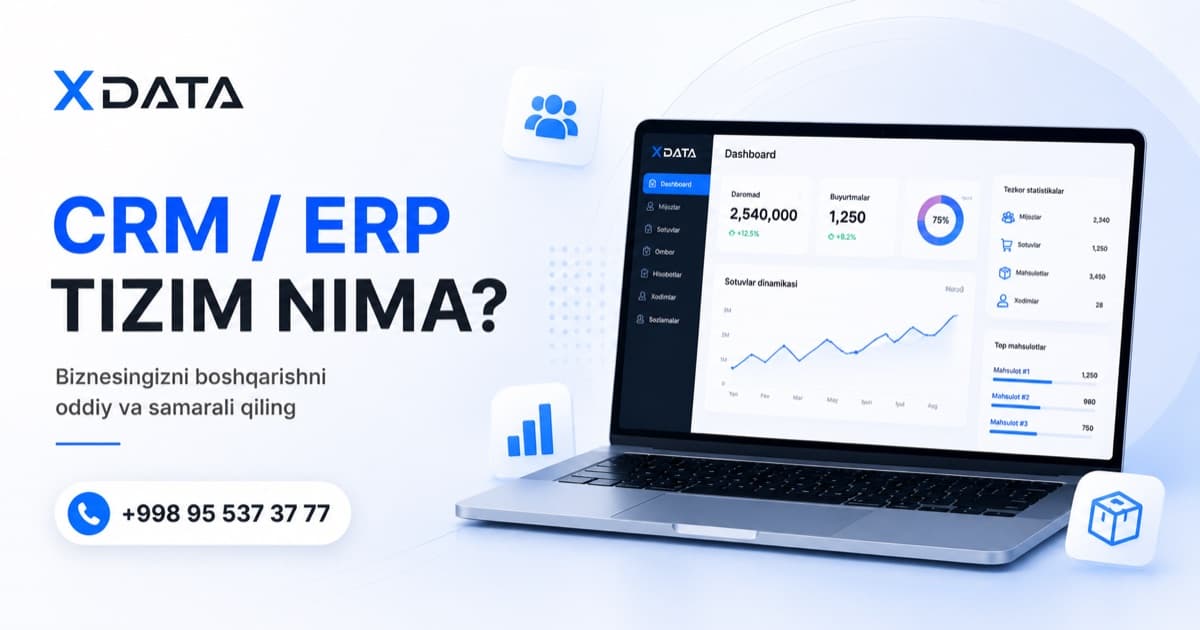
Ditch the spreadsheets: what are CRM and ERP?
When a business is small, Excel spreadsheets and a phone notebook seem enough. But as customers and orders grow, data gets lost, requests are forgotten, and managers duplicate each other's work. CRM and ERP systems solve exactly this problem.
What is a CRM system?
CRM (Customer Relationship Management) is software for managing customers and sales. It:
As a result, no customer is overlooked and every inquiry gets a chance to become a sale.
What is an ERP system?
ERP (Enterprise Resource Planning) unifies a company's internal processes into one system. ERP usually includes modules for:
ERP is the company's "nervous system": data entered in one department is automatically passed to others.
The difference between CRM and ERP
Simply put:
Many modern businesses use both: CRM brings in a new customer, while ERP ensures the order is fulfilled well and on time.
Concrete benefits for business
Off-the-shelf or custom-built?
An off-the-shelf "boxed" CRM or ERP launches fast, but does not always fit your business's unique processes. A custom-built system adapts to your exact way of working — you don't pay for unnecessary features and can expand freely later.
When should you implement it?
If you notice the following, the time has come:
Conclusion
CRM and ERP are not a "luxury for large companies" but an essential tool for any growing business. The earlier you implement them, the more time, money, and customers you save.
The XData team studies your business processes and builds the exact CRM or ERP system you need. For a free consultation, contact us — details are in the "CRM & ERP Systems" section.